
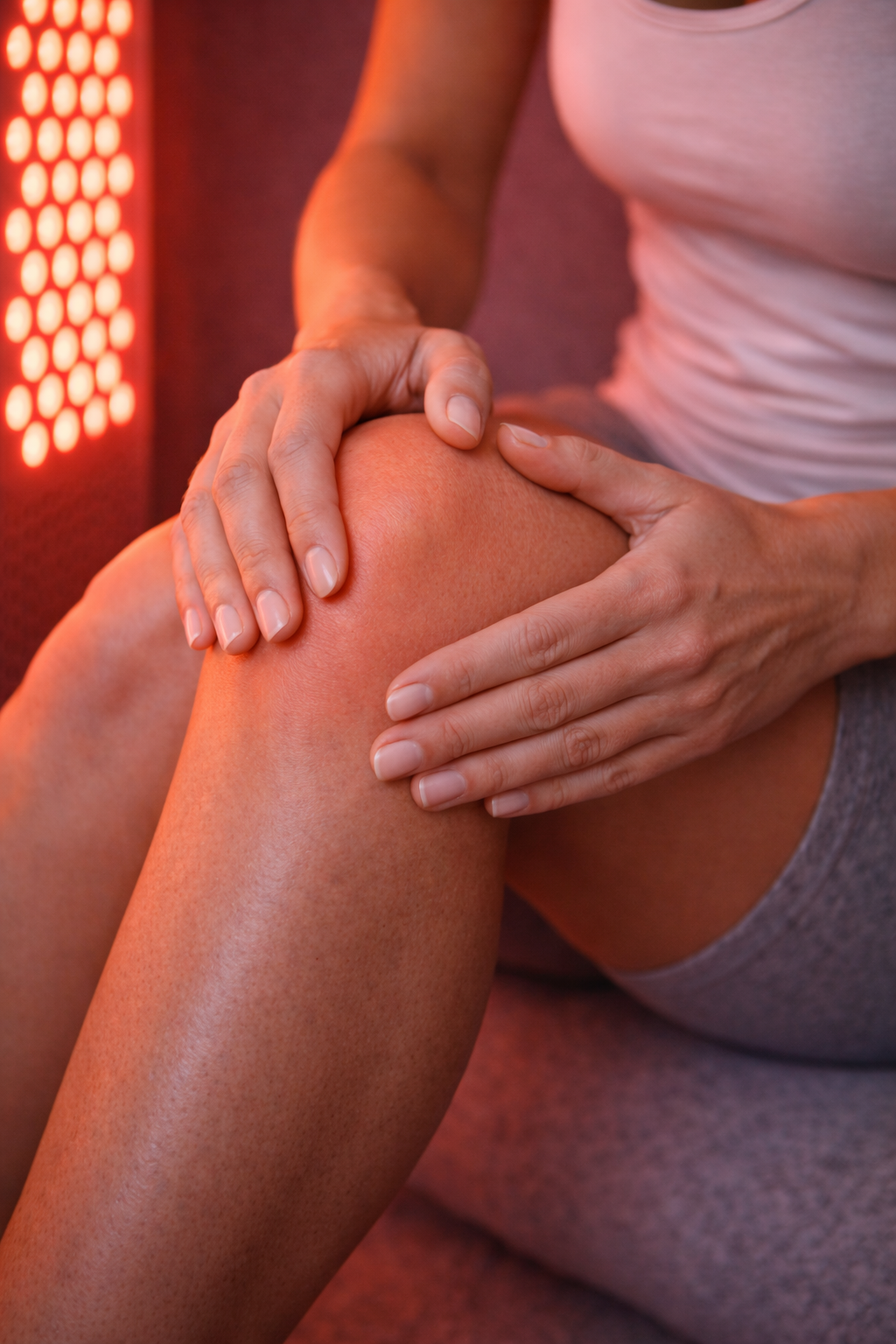
Physical Comfort & Wellness with Red Light Therapy
Some people choose red light therapy as part of a wellness routine focused on general physical comfort and relaxation. Sessions are non-invasive, and individual experiences vary from person to person.
Red light therapy is not a substitute for medical assessment, diagnosis, or treatment. If you have persistent, severe, worsening, or concerning symptoms, please speak with a qualified health professional for appropriate assessment and care.
This service is especially relevant for people dealing with recurring muscle tightness, joint discomfort, chronic tension, overuse patterns, or inflammation-related aches. It does not involve needles, medication, electrical stimulation, or manual manipulation.
Pain can come from many sources, including posture, repetitive movement, exercise, injury history, arthritis, stress, or long periods of inactivity. Red light therapy is not a cure or a replacement for medical care, but it can be a supportive option for non-urgent discomfort and mobility goals.
At A Glance
Treatment type: Non-invasive comfort and mobility light therapy
Best for: Joint discomfort, muscle tightness, recurring aches, stiffness, and inflammation-related discomfort
Downtime: None expected
Sensation: Mild warmth or no strong sensation
Session setup: Rest while the panel is directed toward the sore or stiff region
Eye protection: Supplied for the full session
Results: Often gradual and cumulative with repeated care
Main goal: Support comfort, tissue recovery, reduced stiffness, and easier movement
What is red light therapy?
For pain and inflammation relief, red light therapy is best described as a non-invasive photobiomodulation treatment that uses red and near-infrared wavelengths to support irritated or overworked tissue. The focus is comfort, stiffness, mobility, and recovery from physical strain.
Photobiomodulation means using light to influence biological activity. In this context, red and near-infrared light may interact with cells involved in repair, circulation, inflammation regulation, and tissue recovery.
For pain and inflammation relief, red light therapy is commonly used to support:
Joint and muscle discomfort
Stiffness or reduced mobility
Chronic tension
Exercise or overuse-related soreness
Everyday aches and physical strain
Recovery support after physical activity
How Red Light Therapy treatment May Help people with Pain and Inflammation
Inflammation is part of the body’s normal healing response. When tissue is irritated or stressed, the body increases immune and repair activity in that area. This can be helpful in the short term, but when inflammation becomes excessive or persistent, it may contribute to pain, stiffness, swelling, and reduced mobility.
Red light therapy may help support a healthier inflammatory response and may reduce inflammation-related discomfort in some people. Researchers believe red and near-infrared light can interact with mitochondria, the energy-producing structures inside cells. This may influence cellular energy production, circulation, oxidative stress, and inflammatory pathways.
In simpler terms, red light therapy may help irritated tissues calm down and recover more efficiently. It does not numb the body like a medication, and it does not mechanically loosen tissue like massage. Instead, it works by supporting the biological processes involved in repair and recovery.
Benefits of Red Light Therapy for pain & Inflammation Relief
-
Joint discomfort often involves more than one factor. Inflammation, cartilage changes, muscle tension, old injuries, repetitive movement, and reduced strength can all affect how a joint feels and moves.
For a service page, the most accurate way to explain this is that red light therapy may help support joint comfort and movement for some people, especially when used consistently and as part of a broader mobility or recovery plan.
-
Muscle discomfort can come from exercise, repetitive strain, poor posture, long periods of sitting, stress, or overuse. When muscles feel tight, sore, or fatigued, red light therapy may help support recovery by encouraging cellular energy production and local tissue repair.
For people who experience recurring muscle tension, red light therapy can be a helpful addition to a broader routine that may include movement, stretching, hydration, massage, physiotherapy, acupuncture, chiropractic care, or other provider-recommended treatment. It is best understood as a supportive treatment, not a replacement for diagnosing the cause of persistent muscle pain.
-
Stiffness can make everyday activities feel harder, whether it shows up in the neck, shoulders, back, hips, knees, or hands. It may be related to inflammation, tension, overuse, inactivity, or chronic stress on the body.
Red light therapy may help support reduced stiffness by encouraging circulation, tissue recovery, and a more balanced inflammatory response. Some people use it before or after movement-based activities because it is gentle and does not require downtime.
-
Daily activities can place ongoing stress on muscles and joints. Desk posture, caregiving, workouts, repetitive tasks, standing for long shifts, and poor sleep can all contribute to soreness, tightness, and movement that feels harder than it should.
Red light therapy can be used as a gentle comfort-support tool between more active forms of care. It may help people manage recurring aches or stiffness while they also work on movement, posture, strength, hydration, sleep, or provider-recommended treatment.
For pain and inflammation-related goals, red light therapy often works best when it supports a more complete care plan. Physiotherapy may help address strength, movement, and function; chiropractic care may support joint mobility and alignment; massage therapy may help with soft-tissue tension; and acupuncture may be useful for pain modulation and relaxation. Red light therapy adds a gentle, light-based recovery tool to that broader approach.
-
Chronic tension often builds gradually. It may be related to posture, stress, repetitive movements, muscle guarding, old injuries, or a combination of factors. Red light therapy may help support comfort by calming irritated tissue and supporting local recovery processes.
However, chronic pain should always be taken seriously. If pain is persistent, worsening, radiating, associated with numbness or weakness, or interfering with daily life, it is important to seek medical assessment. Red light therapy can be supportive, but it should not be used to ignore or mask symptoms that need proper evaluation.
What Makes Red Light Therapy Different from other pain & inflammation relief treatments?
Red light therapy is different from many common pain relief approaches.
Heat therapy works mainly by warming tissue, increasing comfort, and relaxing tight areas. Massage works mechanically by applying pressure to muscles and soft tissues. Pain medication may reduce pain signals or inflammation through chemical pathways in the body.
Red light therapy uses light energy, rather than pressure, heat, or medication, to support cellular activity and recovery. The treatment should feel comfortable and does not require physical manipulation of sore areas.
This makes it a useful option for people who want a gentle, non-invasive treatment that can be repeated consistently. It may also complement other therapies when appropriate, such as stretching, strengthening, physiotherapy, chiropractic care, massage, acupuncture, or medical treatment.
What to Expect During a Pain Relief Session
During a pain and inflammation relief session, you can lie comfortably on the treatment table while the red light therapy panel is positioned above you and directed toward the area being supported. Depending on your goals, this may include the back, shoulders, hips, knees, neck, or another region of muscle or joint discomfort.
The session is designed to feel simple, calm, and comfortable. Once you are settled, the panel provides broad therapeutic red and near-infrared light exposure to the targeted area. You may notice gentle warmth from the panel, but the treatment should not feel hot, painful, or irritating.
Because the treatment uses bright therapeutic light, we provide protective eyewear for the full session. Our team will make sure you are properly positioned before the session begins and that the setup feels comfortable for the area being treated.
There are no needles, medications, electrical pulses, or manual pressure on sore areas. Red light therapy is non-invasive, so there are no recovery steps required afterward.
After treatment, most people can return to normal activities, including work, errands, exercise, or daily routines. Some people notice easier movement, reduced stiffness, or a greater sense of comfort soon after a session. Others experience more gradual changes with repeated visits, especially when red light therapy is used consistently as part of a broader recovery or mobility routine.
Is Red Light Therapy Safe?
Red light therapy is generally considered low-risk when used properly, but pain should be approached carefully. New, worsening, severe, or unexplained symptoms deserve proper assessment rather than self-treatment alone.
Protective eyewear is provided and worn during treatment.
Speak with a healthcare provider before red light therapy if you are pregnant, have a history of cancer, have a light-sensitive condition, are taking photosensitizing medications, have an active infection, or have a medical condition affecting the treatment area.
Red light therapy should not be used in place of urgent or medical care for severe pain, sudden swelling, suspected fracture, chest pain, blood clot symptoms, numbness, weakness, neurological symptoms, or pain after a major injury.
How Often Should You Do Red Light Therapy for Pain & Inflammation?
The best schedule depends on your goals, the area being treated, your sensitivity, your overall health, and your provider’s recommendations. Many red light therapy routines involve consistent sessions over several weeks, followed by maintenance sessions as needed.
Because red light therapy works through cumulative biological effects, one session may not be enough for recurring or chronic discomfort. Similar to mobility work, exercise, or physiotherapy, consistency tends to matter.
For everyday aches or post-activity soreness, some people use red light therapy as part of a regular recovery routine. For more persistent pain, it is best used alongside a proper assessment and care plan.
Why Device Quality Matters
For pain and inflammation support, device quality is especially important because treatment often targets larger or deeper areas such as the back, hips, shoulders, knees, or legs. Wavelengths, output, coverage area, treatment distance, and consistency can all affect the quality of a session.
For pain-related goals, near-infrared wavelengths are especially relevant because they are commonly discussed in research for deeper tissue applications. A larger professional panel may also provide more even exposure across broad treatment areas than many smaller personal-use devices.
This consistency matters when someone is using red light therapy as part of an ongoing plan for stiffness, recurring aches, or inflammation-related discomfort.

Red Light Therapy and Your Recovery Routine
Red light therapy works best when it is part of a larger comfort and mobility strategy. Depending on your needs, that may include gentle movement, stretching, strengthening, hydration, sleep, stress management, massage, physiotherapy, acupuncture, chiropractic care, or provider-recommended medical treatment.
For long-term comfort and mobility, red light therapy should be seen as one part of a larger recovery strategy. It can support the body, but it does not replace movement, strength, rest, or medical evaluation when needed.
Who Is Pain & INflammation Relief Red Light Therapy best For?
Pain and inflammation relief red light therapy may be a good fit if you want support for:
Joint and muscle discomfort
Recurring aches or stiffness
Chronic tension
Post-workout recovery
Overuse or repetitive strain
Everyday mobility
General inflammation support
A non-invasive recovery routine
It may be especially appealing for people who want a gentle option without medication, needles, or downtime.
It may not be the best standalone choice for severe injuries, sudden or unexplained pain, advanced inflammatory disease, major swelling, nerve symptoms, or conditions that require medical diagnosis. In those cases, red light therapy may still be supportive, but only as part of a broader care plan.
Red light therapy may be a helpful add-on for people already receiving care for pain, stiffness, or mobility concerns. It can sit alongside physiotherapy, chiropractic care, massage therapy, acupuncture, strengthening, stretching, or other provider-recommended treatment, depending on what is contributing to the discomfort.
The bottom line
Red light therapy is a gentle, non-invasive treatment that may help support pain and inflammation relief over time. It can be used to support muscle comfort, joint mobility, reduced stiffness, chronic tension, and recovery from everyday physical strain.
The key is consistency and realistic expectations. Red light therapy is not a one-time cure and should not replace medical evaluation when pain is serious or unexplained. It is best understood as a supportive treatment that works with the body’s natural repair and recovery processes.
For people dealing with recurring aches, tight muscles, joint discomfort, or everyday mobility challenges, red light therapy can be a simple addition to a recovery routine focused on comfort, movement, and long-term wellness.
Frequently Asked Questions
-
Yes. Red light therapy can be combined with pain and mobility-focused treatments such as physiotherapy, chiropractic care, massage therapy, acupuncture, stretching, strengthening, or movement rehabilitation. The best combination depends on whether your discomfort is related to soft tissue, joints, posture, inflammation, injury history, or overall movement patterns.
-
Red light therapy may help support pain and inflammation relief by encouraging cellular energy production, tissue repair, circulation, and a healthier inflammatory response. Research on photobiomodulation has explored its use for chronic pain and musculoskeletal discomfort, though results vary depending on the condition, device, dose, and treatment schedule.
-
Red light therapy has been studied for joint-related discomfort, including knee osteoarthritis. Some research suggests it may help with pain and function when appropriate treatment parameters are used, but it should not be considered a cure for arthritis or joint disease.
-
Red light therapy may support muscle recovery by encouraging cellular repair and helping calm inflammation-related discomfort after physical strain. It may be useful as part of a broader recovery routine that includes movement, rest, hydration, massage, physiotherapy, acupuncture, chiropractic care, and appropriate medical guidance when needed.
-
No. The treatment does not involve pressure, needles, or electrical stimulation. It should feel comfortable, even when used over sore or stiff areas.
-
Downtime is not expected. Most people go back to their usual activities after treatment, although comfort changes may build gradually over several sessions.
-
Some people feel more comfortable or less stiff shortly after treatment, while others notice changes gradually over several sessions. For recurring or chronic discomfort, consistency is usually important.
-
No. Red light therapy is a supportive wellness treatment and should not replace medical care for severe, unexplained, worsening, or injury-related pain. It is best used as part of a broader care and recovery plan.
-
Yes. Protective eyewear is supplied and worn for the duration of the session.
Sources
Rouge Care — Red Light Therapy Panels
Device information used for medical-grade positioning, third-party testing, G4 wavelengths, panel output, and even light distribution.
https://rouge.care/Cleveland Clinic — Red Light Therapy: Benefits, Side Effects & Uses
Medical overview of red light therapy, potential uses, benefits, limitations, and safety considerations.
https://my.clevelandclinic.org/health/articles/22114-red-light-therapyAmerican Academy of Dermatology — Is red light therapy right for your skin?
Professional overview of photobiomodulation, device strength, non-invasive use, safety considerations, and complementary-care positioning.
https://www.aad.org/public/cosmetic/safety/red-light-therapyPubMed Central — Photobiomodulation in chronic pain: a systematic review of randomized clinical trials
Systematic review discussing photobiomodulation as a potential option for chronic pain management, while noting variation in protocols and populations.
https://pmc.ncbi.nlm.nih.gov/articles/PMC12909510/BMJ Open — Efficacy of low-level laser therapy on pain and disability in knee osteoarthritis
Systematic review and meta-analysis of randomized placebo-controlled trials evaluating low-level laser therapy for knee osteoarthritis pain and disability.
https://bmjopen.bmj.com/content/9/10/e031142PubMed Central — Full text version of the BMJ Open knee osteoarthritis review
PubMed Central full-text version of the BMJ Open systematic review and meta-analysis.
https://pmc.ncbi.nlm.nih.gov/articles/PMC6830679/Stanford Medicine — Red light therapy: What the science says
Medical overview of photobiomodulation, red light therapy, clinical context, and current scientific limitations.
https://med.stanford.edu/news/insights/2025/02/red-light-therapy-skin-hair-medical-clinics.html
Clinically Reviewed by
Dr. Jackson Mann, Chiropractor
Clinical Director, Vancouver Red Light Therapy
Practicing Chiropractor at Electra Health, Downtown Vancouver
Dr. Jackson Mann provides clinical oversight for Vancouver Red Light Therapy’s treatment information and helps ensure our content is grounded in a thoughtful, wellness-focused perspective. As a licensed chiropractor with over a decade of experience in patient care, Dr. Mann brings practical insight into movement, recovery, mobility, tissue function, and musculoskeletal health.

Professional Registration: Registered Chiropractor, College of Complementary Health Professionals of BC
Licence Number: 002181
Practice Location: Electra Health, 970 Burrard Street, Vancouver, BC
For more information on Dr. Jackson Mann please visit the links below: